Calling all Pistoia Alliance members — we’ve got a new book club idea, and we want your input before we get it off the ground.
Earlier this year, a few of us got talking about how hard it can be to stay on top of both great science fiction and real-world scientific developments — there’s always more to read than time allows. The host, Becky Upton, says “I already run a fiction book club that I genuinely look forward to each month, and that conversation got me thinking: why not bring something similar into the Pistoia Alliance community, but with a science focus?”
The idea is simple: a monthly meet-up open to all Pistoia Alliance members, where we come together to discuss something science-related — whatever that ends up meaning to the group. It’s a chance to connect with others across the community, share perspectives, and make time for the kind of reading and discussion that’s easy to keep putting off on your own.
Becky Upton
Before we set anything in stone, we’d love to hear from you. If we met bi-monthly, what would you most want to dig into?
🔹 A) Science fiction books
🔹 B) Nonfiction / factual science books
🔹 C) A relevant research paper or journal article
🔹 D) Something else — tell us in your email!
Drop your vote below and let us know if you’d be interested in joining once we get things started. Your input will directly shape what this club becomes — so don’t be shy!
IDMP-O gives regulators, manufacturers and healthcare providers a shared digital language for cross-border prescriptions, pharmacovigilance and medicine shortage monitoring
London, UK, 10 June 2026 – The Pistoia Alliance, a global, not-for-profit alliance that advocates for greater collaboration in life sciences R&D, has announced the next phase of its Identification of Medicinal Products Ontology. The data resource enables organizations to keep pace with tightening medicines data regulation, including the impending June 2026 deadline for manufacturers to submit standardized medicinal product data to the EMA’s Product Management System (PMS), whether via the PMS user interface or API integration. The new phase formalizes long-term stewardship of the IDMP Ontology (IDMP-O) to support consistent implementation of ISO IDMP standards that govern how medicinal product data is recorded and exchanged globally. Accurids will provide expert maintenance and governance will be overseen by Pistoia Alliance members including Johnson & Johnson, Boehringer Ingelheim, Merck & Co., Amgen, and Global Value Web.
“IDMP is the silent backbone of global drug data. It underpins how medicines are described and understood between organizations. Previously, there was too much room for interpretation, increasing the risk of inconsistencies across companies and markets. Through the Pistoia Alliance, members have created a shared ontology once, collaboratively, rather than repeatedly in isolation,” comments Dr Becky Upton, President of The Pistoia Alliance. “More than 10 major pharmaceutical enterprises have adopted IDMP-O – a signal of how important shared semantic layers are in an era of tightening regulatory and accelerating AI adoption. We’re actively looking for more organizations to get involved as we ensure IDMP-O remains a stable, reliable and reference industry resource for years to come.”
The regulatory shift from document-based medicine information towards structured digital data demands a new level of consistency in how medicines are described. IDMP-O provides that foundation, supporting cross-border prescriptions, pharmacovigilance and medicine shortage monitoring across systems and organizations.
“Seeing our consortium’s work translated into action has been very rewarding. Working with Accurids to build an IDMP-O-based product master for our Innovation Medicine sector showed how a shared industry resource can move beyond theory and become practical enterprise data infrastructure,” comments Gang Xue, Sr. Director, Global Head of TDS Digital at Johnson & Johnson.
“Over the past 5 years, ACCURIDS has partnered with the Pistoia Alliance to create the IDMP Ontology and establish it in pharma. This 3-year commitment provides the maintenance required to move IDMP-O into broader adoption across the industry while ensuring seamless alignment with evolving ISO IDMP standards,” comments Heiner Oberkampf, CEO and Co-Founder of Accurids.
In the project’s next phase, the project’s steering committee plans to further lower technical barriers for organizations at any stage of their IDMP journey with simplified vocabularies, knowledge graphs and implementation guides. Following phased development by industry members, a version of IDMP-O is publicly available. For more information, visit https://pistoiaalliance.org/project/idmp-o/
A major milestone for digital pharmaceutical manufacturing, version 1.0 delivers a standardized, machine-readable framework for CMC processes and is now available to Pistoia Alliance members.
The Pistoia Alliance today announced the release of Version 1.0 of the Pharmaceutical CMC Process Ontology, a major milestone in the effort to create a standardized, machine-readable representation of pharmaceutical Chemistry, Manufacturing and Controls (CMC) processes.
The CMC Process Ontology is explicitly focused on process and process development, while providing defined integration points to related domains such as analytics, materials, equipment, and quality. Version 1.0 establishes the core process framework, aligned to ISA-88 principles, and provides a shared semantic foundation for representing process structure, recipes, execution context, parameters, sampling, and key process linkages.
The release marks the point at which the ontology is mature enough to be made available beyond the project’s funding members, with automation in place to manage updates, provide syntactic validation, and capture community feedback. The ontology has also been tested and refined against real laboratory and process scenarios and is structurally compatible with leading complementary ontologies.
“Version 1.0 is the outcome of careful ontology development and maturation and is now being made available to the broader Pistoia Alliance membership for exploration and implementation,” shared a member of the project’s Steering Committee. “It is structural compatible with complementary ontologies, a prerequisite for its flexible deployment in a foundational role, accommodating both early science and discovery use cases at laboratory scale, and the increasingly formal controlled specifications required as processes progress into manufacture. We expect this to help adopting organizations identify common lineage across process development and manufacturing.”
Birthe Nielsen, Project Manager for the CMC Process Ontology at the Pistoia Alliance, added: “Version 1.0 has been tested and refined against real laboratory and process scenarios. That gives us confidence the ontology is not only theoretically sound but practical and usable for describing real-world processes, a credible foundation for broader adoption and future expansion.”
The CMC Process Ontology Version 1.0 is available for Pistoia Alliance members in a new Release Repo. To request access to Version 1.0 and provide feedback, contact Birthe Nielsen.
Development of the ontology is ongoing, with planned expansion of coverage including process execution context. Funding members of the project have access to the latest development version via a private GitHub repository.
To learn more about the project behind the CMC Process Ontology, visit the project webpage.
From left to right: Andrea Manfrin, Deputy Director, Clinical Investigations, MHRA; Lisbeth Bregnhoj, GCP Inspector, Danish Medicines Agency; Gabriel Westman, Head of AI, Swedish Medical Products Agency; Thierry Escudier, Portfolio Lead, Pistoia Alliance
Regulators keen for earlier engagement from pharma on AI, while poll reveals social media’s growing role in patient-centric drug development
London, UK, 28 May, 2026 – The Pistoia Alliance, a global, not-for-profit alliance that advocates for greater collaboration in life sciences R&D, has released new poll data showing trust and regulatory uncertainty are the biggest barriers to AI adoption in clinical trials, cited by half of respondents (50%). The poll was conducted at the Clinical Trials Technology Congress (CTTC) in London, where the Alliance hosted a panel with regulators from the MHRA, Danish Medicines Agency and Swedish Medical Products Agency.
“A recurring message at the Congress was that regulators are ready to embrace AI, and are keen for pharma companies to engage early to ensure adoption is safe and compliant. The panel rightly emphasized that speed without control is not enough when patient safety is at stake. For AI to support clinical development at scale, the industry needs validated, auditable and explainable approaches, not black-box models that create uncertainty for sponsors and regulators alike,” comments Dr Becky Upton, President of the Pistoia Alliance. “Regulators are not the enemy. They can be partners to pharma, working together to formalize AI guidance that supports both sides. This is exactly where the Pistoia Alliance helps, by convening pre-competitive working groups that bring pharma, technology providers and regulators together around common frameworks.”
The poll data show that AI is beginning to deliver value in clinical development, with 42% of respondents seeing early signs of Return on Investment (ROI) and a further 23% expecting ROI but not yet realizing it. Respondents said that over the next 3-5 years, AI will have the most impact on cleaning data, data analysis and insight generation (48%) and sourcing and engaging patients (22%).
“It is exciting that so many potential new therapies are emerging as more AI-discovered candidates successfully move downstream. But this influx also means more programs are competing for the same trial sites and patient populations. The poll shows clinical development professionals believe AI can help address some of these pressures, particularly in sourcing and engaging patients, which remains one of the industry’s most persistent challenges,” said Zahid Tharia, Director of Open Pharma Research, organizers of CTTC. “Our Congress was a great start to exploring how technologies like AI can support the industry as it moves towards more patient-centric development. We look forward to seeing how these trends continue to unfold at our 2027 Congress.”
The poll also examined the value of real-world data, including social media listening, in shaping clinical development operations. It found that 60% of respondents are already using, piloting or exploring patient-generated data to inform clinical development decisions beyond marketing. More than half (58%) say the primary benefit of social media listening is understanding patient needs, monitoring sentiment and experience.
“The data show that pharma recognizes the value of social media as an opportunity to hear the unfiltered patient voice. Collecting data from outside of traditional trial settings is becoming increasingly important as drug development seeks to become more patient-centred. The next step is ensuring these data are being collected in an ethical and standardized way,” comments Thierry Escudier, Clinical Portfolio Lead at the Pistoia Alliance. “The Alliance has already started this work by developing a best-practice framework for the ethical use of social media data, and we want to build on this work as we expand our role in the clinical space. We’re calling on pharma companies to come forwards to fund and suggest new projects in the clinical space.”
The latest release strengthens regulatory compliance capabilities and deepens integration with the wider life sciences data ecosystem.
The Pistoia Alliance has released version 1.6 of the IDMP Ontology (IDMP-O), an expert-built framework for implementing the IDMP ISO standards.
IDMP-O provides the industry with a shared, machine-readable language for medicinal product data that goes beyond the legal requirements of the ISO standards and gives organizations a framework for internal data alignment, regulatory submission, and cross-system interoperability. Version 1.6 is now available to funding project members and will be made available to all Pistoia Alliance members in six months. Version 1.4 remains publicly available.
A stronger foundation for regulatory and enterprise use
Version 1.6 delivers a number of significant improvements that make the ontology more robust, more interoperable, and easier to implement across the industry.
The release strengthens support for the batch tracking use case, improving the ontology’s ability to represent the full lifecycle of medicinal product batches. This capability is of growing importance as regulators and industry alike move toward end-to-end traceability.
Critically, v1.6 deepens IDMP-O’s integration with the broader life sciences data ecosystem. The ontology now aligns with the Basic Formal Ontology (BFO), the Financial Industry Business Ontology (FIBO), the Industrial Ontology Foundry (IOF), and the Pistoia Alliance’s own CMC Process Ontology. Thus, organizations working across multiple data standards and domains can achieve true semantic interoperability. The release also includes improved vocabularies and metadata, the resolution of a number of reasoning and consistency challenges, and targeted bug fixes throughout.
On the relevance of this release, Project Manager Aditya Tyagi shares: “this release is the product of sustained collaboration between pharmaceutical companies, ontology experts, and industry partners who understand that consistent, trusted medicinal product data is not a competitive issue, but a shared infrastructure challenge. IDMP-O gives the industry a single, authoritative language for IDMP data that organizations can implement with confidence. Version 1.6 makes that language richer, more interoperable, and more ready for the demands of the next decade.”
Invitation to explore the IDMP Ontology
The Pistoia Alliance invites pharmaceutical companies, technology vendors, and regulatory data experts to engage with the ontology, whether as funding members with immediate access to the latest versions or as part of the IDMP-O Community of Interest.
Find out more about the IDMP Ontology and access to members on the project webpage.
The public version of the IDMP Ontology can be accessed here.
New Pistoia Alliance poll finds regulatory teams benefit most from AI, but just 1% see value in the wet lab
Conference tackles regulatory alignment, digital twins and omics data, while Roche wins Data Science Team of the Year and Shruti Kaushal of AbbVie wins Young Data Scientist Award
London, United Kingdom, 29 April 2026 – The Pistoia Alliance, a global, not-for-profit that advocates for greater collaboration in life sciences R&D, has released new poll data from its annual European conference, revealing that while AI use is becoming widespread across life sciences organizations, its measurable impact on drug R&D remains limited. Almost a third (30%) of life sciences professionals say their organization has implemented an enterprise-wide AI platform, yet 69% lack clear metrics to assess AI’s impact on reducing the cost or time required for drug R&D, and just 4% report tangible benefits of AI for R&D leadership. The poll, sponsored by Thoughtworks, was conducted at the event attended by 300 industry leaders at the Royal Society of Medicine in London.
“A key focus at this year’s conference was understanding why the gap between AI investment and value persists. The polls show AI success depends on getting both the data and people elements right – 59% say their companies need to prioritize data quality and accessibility, while 22% highlight AI adoption and change management,” comments Dr Becky Upton, President of The Pistoia Alliance. “The success stories shared on stage show these barriers can be overcome by combining technology, scientific and regulatory expertise. In essence, progress depends on collaboration, which is where the Alliance plays a critical role, bringing organizations together through a portfolio of projects and communities that continues to evolve in line with industry needs.”
The survey also revealed that AI’s impact is uneven throughout the R&D lifecycle. More than half (54%) of respondents said teams focused on regulatory submissions and reporting are seeing the greatest benefits from AI, alongside research analysis teams (21%). By contrast, just 13% cited value in automating scientific workflows and experiments while only 1% report value in the wet lab.
“Many leaders are asking, ‘how much AI are we using?’ when they should be asking, ‘how much faster can we move because of it?’ The real value of AI lies in increasing the speed of the entire R&D pipeline, but today it is often confined to isolated projects,” comments Ammara Gafoor, Head of Life Sciences Data & AI, Thoughtworks. “Different teams are applying AI to individual use cases, such as target identification or molecule generation. But without a joined-up view of how these efforts work together, AI is stagnating at the level of local gains. To move beyond this plateau, the industry must rethink how humans and AI work together, including how to build reusable agent capabilities and integrate them across the enterprise.”
Alongside plenary sessions, conversations from the conference were split into four themes:
Semantic Data in Pharma: Speakers included Roche, AstraZeneca, AbbVie, Pfizer, Rancho Biosciences, Elsevier and Sigmatic Sciences, exploring how semantic data and ontologies improve interoperability and ground AI in reliable knowledge.
Accelerating Late-Stage R&D: Experts including the FDA, Parexel, Boehringer Ingelheim, Roche, Amino Data and Our Future Health discussed digital twins, social media data, omics and patient cohort engagement.
Practical AI and Machine Learning: Sessions featuring Bayer, IBM, Thoughtworks, UCB and Sapio Sciences covered multi-agent systems, literature analysis and trial forecasting.
Exchange of Data and Regulatory Submissions: Speakers from GSK, Eurofins, AstraZeneca, AbbVie and Zifo examined how data standards can improve in vivo data and non-animal model submissions.
“It’s a contradiction that organizations report adopting AI enterprise-wide, when its value is not reaching specialized R&D activities. Instead, AI is largely being used for traditional Natural Language Processing tasks like searching literature and writing reports. If AI were truly embedded into R&D, we would see impact in more workflows,” says Dr Christian Baber, Chief Portfolio Officer for The Pistoia Alliance. “Progress in areas such as regulatory submissions is encouraging, but there is more to be done in environments like the lab. The responsibility for this does not sit with pharma alone. Regulators have a role to play, and are also keen to move quickly while ensuring that patient safety is maintained. We encourage closer collaboration between the Alliance and regulators to shape the data and standards needed to scale AI.”
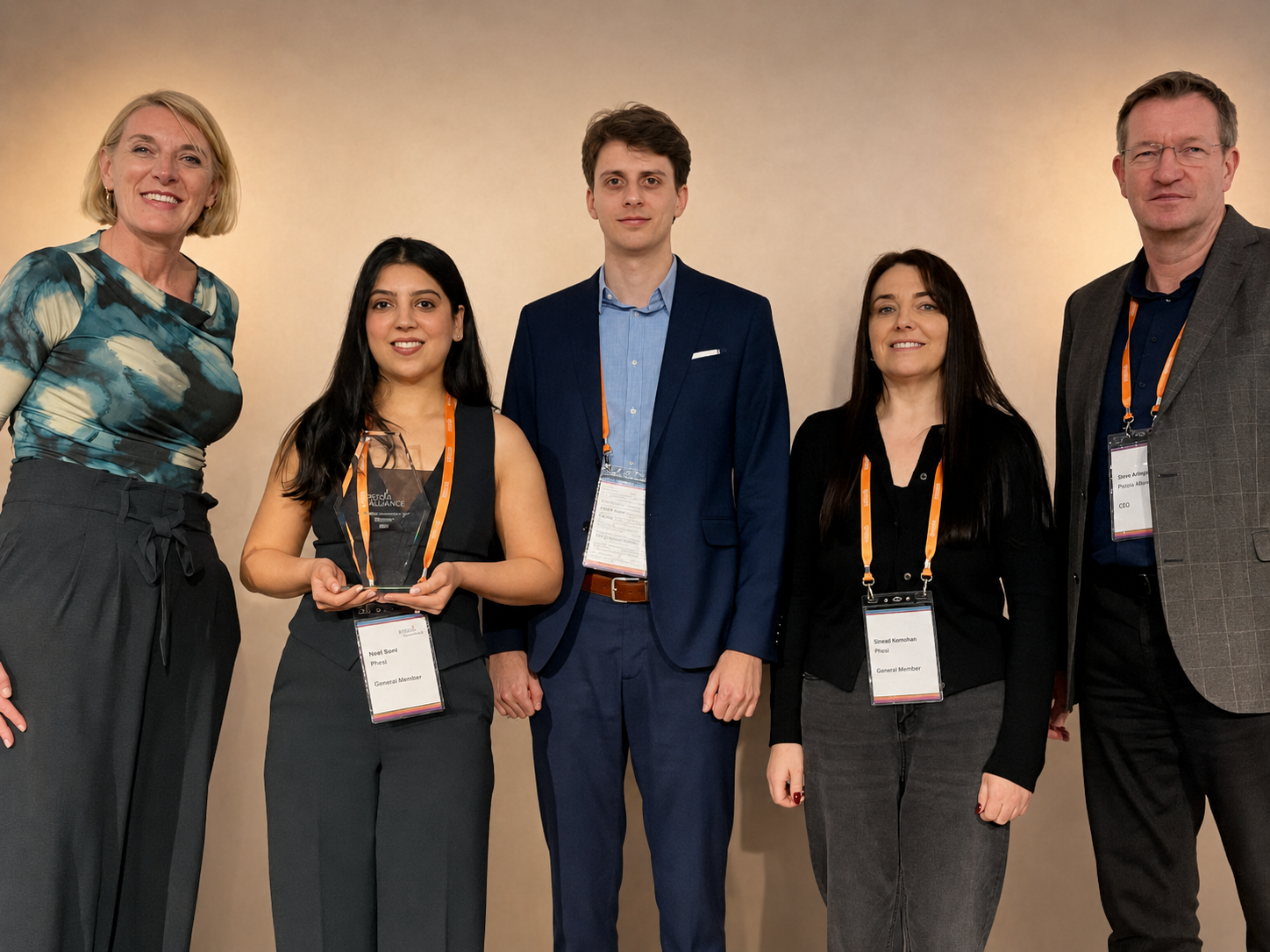
The conference also saw the introduction of the Pistoia Alliance’s Data Scientist Team of the Year Award, won by Roche, and for the second year running, the Young Data Scientist Award, won by Shruti Kaushal of AbbVie. To learn more about the awards, Pistoia Alliance membership and opportunities to get involved in its projects and communities, visit www.pistoiaalliance.org.
Building on the themes explored at the conference the Pistoia Alliance will be hosting a conference focused on enabling AI-ready data in Boston, 10-11 November 2026.
The Pistoia Alliance has launched version 1.0 of its In Vitro Pharmacology (IVP) Assay Repository, a new platform designed to standardize how biological assays are captured, shared and reused across the life sciences industry.
Developed as part of the IVP project, the repository addresses long-standing challenges around fragmented data, inconsistent formats, and limited interoperability—helping organizations move toward more collaborative and efficient research practices.
A standardized and collaborative approach to assay data
The IVP Assay Repository provides a structured framework for registering and managing in vitro pharmacology assays in a consistent and transparent way. Ultimately, it can facilitate the sharing of critical information about assays used in in vitro pharmacology submissions with regulatory authorities. Through a guided interface, users can search, filter, and explore registered assays, as well as contribute new entries covering assay design, targets and molecular details. By applying controlled vocabularies and standardized data fields, the repository supports higher data quality, reduces duplication, and enables more effective knowledge sharing across teams, organizations, and regulatory partners.
Reflecting the repository’s role in advancing data consistency and regulatory readiness, project Steering Committee member and Associate Director of Mechanistic and Predictive Safety Profiling at Novartis, Bérengère Dumotier, PhD, highlights its broader impact: “By facilitating the systematic transmission of in vitro pharmacology data to regulators, the IVP Assay Repository (v1.0) is an important step in the realm of data management for high-quality IND submission and review by regulators. It is a FAIR-aligned, centralized open bioassay repository linked to standardized result templates and addresses the critical need for consistency and transparency during IND submission as a product of cross-industry efforts in conjunction with regulators. The IVP Assay Repository creates a shared, FAIR foundation that benefits the entire biopharma ecosystem.”
Advancing industry collaboration
The platform was developed through collaboration with regulatory authorities and Pistoia Alliance members from pharma and enterprise informatics, including Abbvie, Merck, Novartis and Zifo. This effort reflects a shared ambition to create a more connected data ecosystem for scientific innovation.
Head of Data and Digital at Zifo, Aishwarya Balajee, described the context of the repository launch as follows: “Scientific progress accelerates when knowledge and data are shared in ways that are structured, accessible, and interoperable. The IVP Assay Repository is a step forward in that direction.” On behalf of the Zifo team who developed the repository, she added: “We don’t see this as just building a tool, but as strengthening collaboration and enabling a more connected data ecosystem for the industry.”
Open for community feedback
The Assay Repository is now available to the community as an initial release, with the Pistoia Alliance inviting feedback from across the life sciences community.
As governance models and usage frameworks continue to evolve, the platform will be iteratively developed to ensure it meets the needs of researchers, data scientists, organizations, and regulators.
Supporting the future of IVP
The IVP project aims to improve the reproducibility, interoperability, and usability of in vitro pharmacology data through collaboration with key stakeholders across the biopharma ecosystem, including pharmaceutical companies, contract research organizations, and regulators. The launch of the Assay Repository marks an important step toward this vision, supporting better data integration, reducing inefficiencies, and enabling more informed decision‑making in drug discovery and development. The project’s impact has been recognized by the industry, with the IVP project and the Assay Repository receiving an Honorable Mention at the Bio‑IT World Awards 2025.
Find out more about the IVP project and explore the Assay Repository:
The Pistoia Alliance has announced the finalists for its 2026 Data Science Talent Awards which recognize rising stars in data science and reward innovation and collaboration in life sciences R&D. Entries were received from across the global biopharmaceutical ecosystem and competition was fierce.
The finalists are as follows:
Young Data Scientist of the Year Finalists
Shruti Kaushal, AbbVie
Zachary Hatzenbeller, GlaxoSmithKline
Patrik Hegel, Sanofi
Data Scientist of the Year Finalists (Team leader and company)
Sophie Bailes, AstraZeneca
Annika Kreuchwig, Bayer AG
Raul Rodriguez-Esteban, Roche
The finalists were selected from an outstanding shortlist of talent by a dedicated judging panel who have generously given their time to judging these prestigious awards that are unique in showcasing the power of data science in advancing life sciences R&D.
Judges
Lars Greiffenberg, Senior Director, R&D Information Research, AbbVie
Derek Marren, Senior Director – Principle IT capability Business Partner & AI Lead for Research, AstraZeneca
Anastasia Christianson, Senior Industry Advisor
Bryn Williams-Jones, Founder and Chief Operating Officer, Connected Discovery Ltd
Sergio Rotstien, Senior Industry Advisor
Becky Upton, President, Pistoia Alliance
Christian Baber, Chief Portfolio Officer, Pistoia Alliance
The finalists will present their entries at the Pistoia Alliance London Conference at the Royal Society of Medicine, April 13-14, 2026 and the winner of each award category will be determined following an audience vote. The winners will receive prize money and access to the Pistoia Alliance’s training resources.
Dr Becky Upton, President of the Pistoia Alliance said: “Data Science plays a pivotal role in transforming life sciences and is so important as the foundation upon which AI models are built. The Pistoia Alliance is proud to be nurturing and supporting the development of emerging talent in the global life sciences industry and celebrating the impact of collaborative innovation.”
Alliance calls for funding and expertise for the next phase of its social media project, marking its first direct engagement with oncology, rare disease and cardiology patients
Boston, US, 25th March 2026: The Pistoia Alliance, a global, not-for-profit alliance advancing collaboration in life sciences R&D, is launching new patient research to shape the ethical use of social media listening in drug development, as part of its Social Media Real-World Evidence (RWE) project. Marking an evolution in the Alliance’s work, the study marks the first time the Alliance has directly engaged patients as it expands its advocacy into clinical fields. The patient research follows the project group’s publication of a peer-reviewed paper in Frontiers in Medicine, which provides a best practice framework for pharmaceutical companies seeking to use social media data in a consistent and ethically governed way. The paper was developed by experts from Bayer, Roche, Boehringer Ingelheim, Chiesi and Semalytix.
In parallel, the project team has developed a decision-support questionnaire, “Pomelo,” designed to help pharmaceutical companies assess whether and how social media listening should be used in real-world data initiatives. The tool has been accepted for presentation at ISPOR 2026, the leading international conference for health economics and outcomes research, and will also be presented at the Pistoia Alliance’s Spring Conference in London on 14 April. It will be published on the Alliance’s website following the conference.
“Social media is a vital channel for patients to share real-world experiences of their symptoms, expectations and unmet needs. Compared to structured clinical trial data, social media offers more immediate and unfiltered insight. This data is already being explored in marketing and pharmacovigilance, but its application in drug development remains an emerging area,” said Thierry Escudier, Portfolio Lead at the Pistoia Alliance. “Advances in AI and natural language processing mean we can now make sense of unstructured social media conversations, creating an opportunity to inform drug development responsibly – provided it’s done with the right standards in place.”
The paper analyzed published social media listening research to establish best-practice guidance for drug developers, including guidance on:
Ethical and transparent data use: how to use publicly available data with strong safeguards around anonymization.
Study design and governance: recommendations on understanding bias and limitations.
Data collection and analytics: best practices for source selection, handling unstructured data, and applying advanced analytics and AI techniques in a reproducible way.
“Social media plays a vital role in connecting patients who might otherwise never meet, particularly within small patient populations such as rare diseases,” said Zorana Maravic, executive director at Digestive Cancers Europe. “Ensuring that patient voices are respected, protected and used appropriately in research is essential if this data is to genuinely benefit patients and help improve future treatments. Initiatives like the Alliance’s demonstrate how collaboration can turn the patient voice into meaningful progress.”
The patient phase of research is approved by the German Ethics Council and will begin in March 2026 with 54 patients from US, Spain and Germany across oncology, rare disease and cardiology communities. The goal is to ensure methods for collecting and analyzing social media data reflect real patient expectations, priorities and concerns. Following the first cohort, the project group plans to run a larger quantitative study involving 300-400 patients, and is calling on regulators and pharmaceutical companies to support this expansion.
“Undertaking patient research represents a shift in how the Pistoia Alliance approaches collaboration in the clinical space. Our project team works closely with pharmaceutical companies to establish robust, evidence-based methods for social media listening. Now, by engaging patients, we’re moving beyond theory into practice – testing assumptions, understanding concerns and building trust,” comments Aditya Tyagi, Project Manager at the Pistoia Alliance. “This research gives patients a direct role in shaping the methods and safeguards that will govern future use of their data. To scale this work and validate it across larger patient populations, we need regulators and industry partners to engage even further with us and support the next phase.” To get involved, please contact ProjectInquiries@PistoiaAlliance.org. For more information on the Pistoia Alliance, visit https://www.pistoiaalliance.org/.
We are proud to announce the shortlist for our 2026 Data Science Talent Awards.
For the second year running our Young Data Scientist of the Year Award will recognize and reward emerging talent in life sciences. This year we have also introduced a new Data Science Team of the Year Award to showcase the importance of innovation and collaboration in advancing life sciences R&D.
Entries were received from across the industry, demonstrating technical excellence, innovation and impact. Our expert panel of judges are currently selecting three finalists for each category to present at the Pistoia Alliance’s upcoming conference at London’s Royal Society of Medicine, April 13-14, 2026, where the winners will be chosen following a live audience vote.
Young Data Scientist of the Year Shortlist
Jon-Michael Beasley, AbbVie
Shruti Kaushal, AbbVie
Jagjot Tamber, Ascent Pharmaceuticals
Minerva Martinez, AstraZeneca
Joseph Oddy, Cell and Gene Therapy Catapult
Jackson Faulx, CSL
Zachary Hatzenbeller, GlaxoSmithKline
Yixing Lu, Lonza
Renad Alzghoul, Princess Sumaya University for Technology
Zoe Bleicher, Rancho BioSciences
Aishwarya Pathak, Rancho BioSciences
Patrik Hegel, Sanofi
Data Science Team of the Year Shortlist (Team leader and company)
Brian Martin, AbbVie
Numan Karim, AbbVie
Elisabeth Dietze, AstraZeneca
Sophie Bailes, AstraZeneca
Annika Kreuchwig, Bayer AG
Alena Sheveleva, Dassault Systèmes
Arup Sarmah, Novartis
David Mucientes, Novartis
Oleg Stroganov, Rancho BioSciences
Raul Rodriguez-Esteban, Roche
Gopalika Sharma, Sanofi
Sven Jager, Sanofi
Andrew Wyatt, Sapio Sciences
Yufei Luo, Servier
Judges
Lars Greiffenberg, Senior Director, R&D Information Research, AbbVie
Derek Marren, Senior Director – Principle IT capability Business Partner & AI Lead for Research, AstraZeneca
Anastasia Christianson, Senior Industry Advisor
Bryn Williams-Jones, Founder and Chief Operating Officer, Connected Discovery Ltd
Sergio Rotstien, Senior Industry Advisor
Becky Upton, President, Pistoia Alliance
Christian Baber, Chief Portfolio Officer, Pistoia Alliance
Further details about the Pistoia Alliance’s London conference can be found here.
The Pistoia Alliance has launched its 2026 Lab of the Future Survey, now running for the fourth consecutive year and continuing to serve as a leading benchmark for technology adoption and investment trends across life sciences R&D.
Conducted in partnership with Open Pharma Research, organisers of the Lab of the Future Congress Boston and Europe, the annual global survey tracks the adoption of emerging technologies and the evolving skills required to enable innovation and collaboration in modern laboratories.
2025 Findings: Building Foundations Before Scaling AI
Results from the 2025 survey highlighted a clear industry shift toward strengthening digital foundations, even as artificial intelligence remains a top strategic priority.
AI/ML continues to dominate investment plans:
77% of respondents expect to use AI/ML within the next two years
64% ranked AI/ML as their number one investment area
However, actual AI/ML usage remained largely static year-on-year, indicating that many organisations are still putting the necessary infrastructure in place before scaling adoption.
Cloud adoption continues to grow:
80% of responding labs now use cloud technologies
This steady increase is likely driven by instrument vendors transitioning software to cloud-based platforms, combined with reduced security concerns and greater recognition of the scalability and accessibility benefits.
ELNs are now the most widely adopted lab technology:
Usage rose to 81%, up from 66% in 2024
This sharp increase may reflect platform renewal cycles and reinvestment in modernised systems. Organisations increasingly recognise that robust, digitised data foundations — capturing data at source — are essential to enable AI and advanced analytics.
Emerging Technology Hype Cools
The survey also revealed a more pragmatic approach to innovation. Compared to 2024, adoption and expected use of several emerging technologies declined:
Digital twins adoption fell from 23% to 17%
Expected use of quantum computing in the next two years dropped from 20% to 18%
Expected use of wearables decreased from 41% to 35%
The findings suggest companies are prioritising scalable, practical technologies such as ELNs and cloud platforms over experimental solutions.
Take Part in the 2026 Survey
With more than 200 global respondents participating each year, the Lab of the Future Survey has become a trusted industry benchmark. The 2026 edition will continue to track how laboratories are investing, evolving and preparing for AI-enabled R&D.
Life sciences organisations are encouraged to participate and help shape the next benchmark for the future of the lab.
We are pleased to announce that the Pistoia Alliance has signed a new agreement to collaborate with Allotrope Foundation, a non-profit consortium dedicated to standardizing and linking scientific data to accelerate insights generation. The Allotrope Framework offers a toolkit for developing interoperable data models using ontologies to drive FAIR data creation at source, and has been broadly applied to instrument result data with applications to other data types coming soon. The Pistoia Alliance has over a decade of experience delivering innovative member-driven projects that are focused on application of FAIR principles and data standards. Pistoia Alliance has new project ideas that will benefit from use of Allotrope technology and the expertise of Allotrope Foundation and its members. Allotrope Foundation’s standardized content requires testing and feedback from real-world implementations for continuous improvement, which Pistoia Alliance’s portfolio of projects and broad market outreach will help provide.
“We are delighted to be collaborating once again with Allotrope Foundation who are leading the way in setting a new standard for leveraging data through the Allotrope Framework. We look forward to identifying opportunities to work together to speed up research and development and deliver greater benefits to members of both organizations,” commented Dr. Becky Upton, President of the Pistoia Alliance.
Vinny Antonucci, Chair of Allotrope Foundation added: “The age of AI has provided unprecedented opportunities to extract additional value from our data, creating necessary additional focus on data context and quality. This pre-competitive collaboration brings together the highly complementary capabilities of each organization to accelerate advances in data quality which move us closer to releasing the value hidden in our data.”